Reese Harper Made an Album Out of the Year He Lost Himself
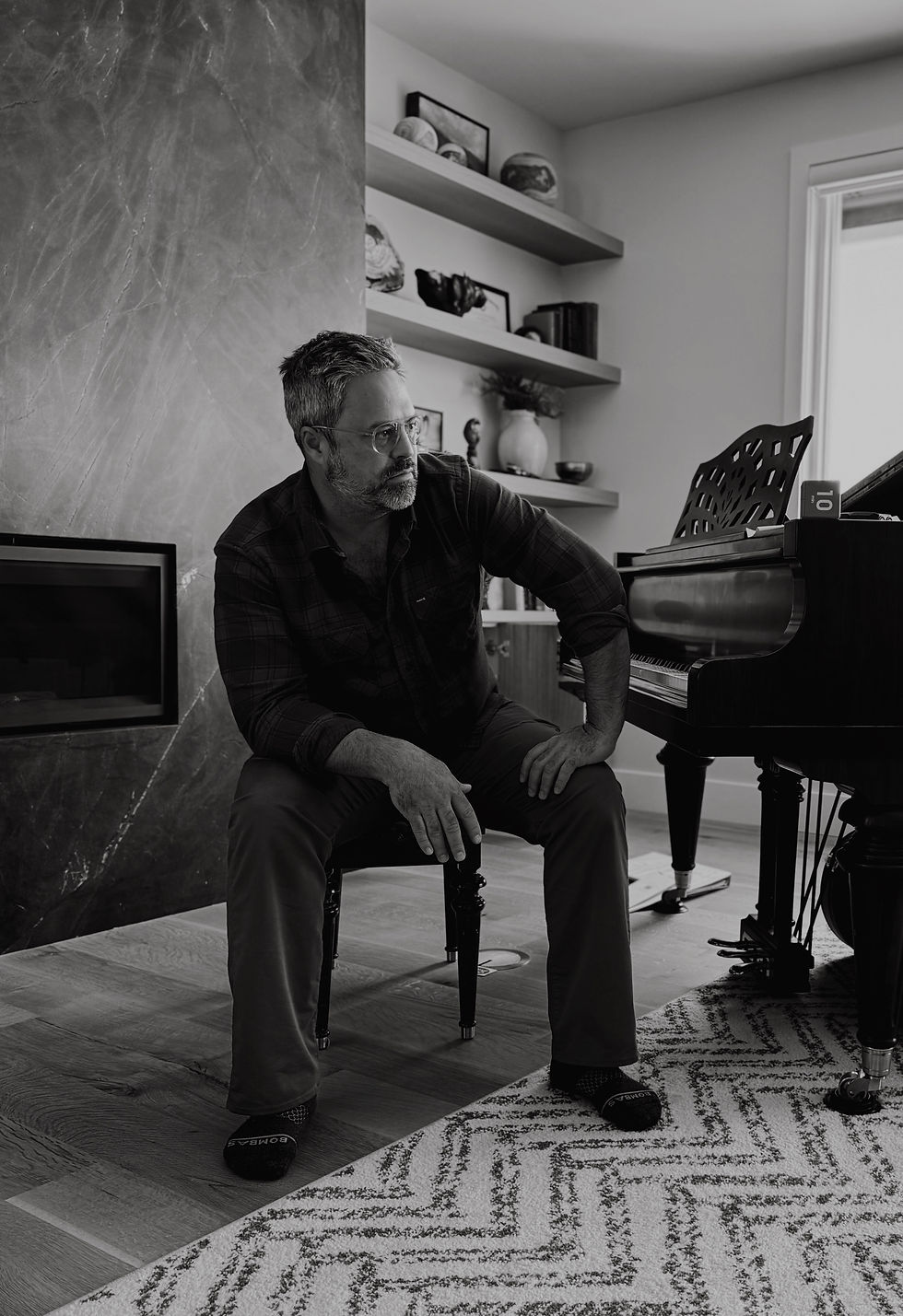
Grief rarely arrives in one piece. For Reese Harper, it came in three, and arrived almost at once.
A marriage ending. A lifelong faith giving way. A software company he'd spent nearly a decade building, liquidated against his will. None of these losses cancel each other out or make the others easier. They simply stack, until the person standing underneath them no longer recognises himself. Harper's response wasn't to process this quietly and move on. It was to drive into the mountains, find an upright piano in a borrowed cabin, and start improvising without any plan for what would come out of it.
What came out became A Waltz in the Woods, his debut project, and it carries the texture of exactly what it is: a record made by someone who needed somewhere to put feelings that had nowhere else to go. "At first, it was rocky," Harper says. "I would sit down and search for sounds that felt good in my hands. Sometimes I would land on a small phrase that broke up the pain for a few seconds. Sometimes it just gave shape to the silence in the room."
That instinct, giving shape to silence rather than filling it, defines the album's sound. Felt piano, cinematic minimalism, subtle analog textures, all recorded in living rooms and mountain spaces on vintage instruments rather than in a studio built for precision. Traces of Americana and gospel harmony surface throughout, alongside the loose, improvisational feel of music made for nobody but yourself. None of it is designed to impress. All of it is designed to be true.
For most of his adult life, Harper kept this part of himself separate from everything else. He built businesses in financial advisory and technology, serving professionals and entrepreneurs across the country, while music stayed private: a late-night habit, an early-morning escape, something practiced alone in the mountains around Big Cottonwood Canyon. A Waltz in the Woods is the first time that private practice has become a public document, and the shift shows in how unguarded the record feels.
The album's title does some quiet work of its own. A waltz implies structure, partnership, something choreographed for two. The woods are solitary by definition. Harper doesn't try to reconcile the two ideas. He simply lets them sit together, the way most real grief does: structured in places, formless in others, never entirely one thing or the other.
There's no resolution offered by the end of the record, no tidy arc from collapse to recovery. What's offered instead is company. Music, as Harper puts it, for people who are tired from being strong. Anyone who has spent a year holding themselves together will recognise exactly what he means.
A Waltz in the Woods is out now. Reese Harper's essay on the making of the album is available here.



Comments